
Malta
All in
This striking pair of trousers holds space for all the stories and journeys being told through these textiles. Each patch, piece and thread represents an abstract expression of personal experiences, emotions, and identities. Through appliqué, patchwork and stitching techniques, the composition symbolizes diversity, connection, and the coming together into one shared story.
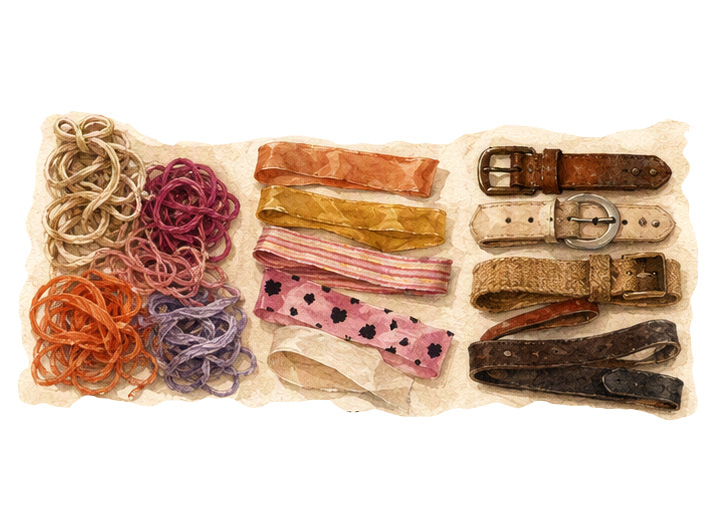
The garment features an oversized body and wide-leg structure, reclaimed belts and buckles form the garment fastenings from top to bottom down the leg on both sides, allowing for an inclusive and adaptable fit across different body types.
“All In” is a pair of oversized, wide-leg trousers that bring together diverse personal stories into a single collective narrative. Through patchwork, appliqué, and stitching, each textile panel represents individual experiences, particularly those of migrant women, forming a unified expression of identity, connection, and transformation.
Developed through collaborative workshops, participants created their own fabric panels using recycled materials, working intuitively with texture and layering. These were then assembled into the final garment, reflecting a shared journey from hardship toward hope and empowerment.
The design features adjustable fastenings made from reclaimed belts and buckles, allowing for an inclusive fit across different body types. Made entirely from repurposed textiles such as old clothing, soft furnishings, and fabric scraps, the piece emphasizes sustainability through reuse and low-waste practices, combining handcraft with minimal machine use.
Malta through history has been the salvation for many a lost sailor. Known as shipwreck island, it has liberated many from the rough and unforgiving sea. As with these trousers, they welcome all, regardless of size, shape, religion or cultural background. Where each layer upon layer, continues the saga of those that came before as well those set to return.
Materials Used
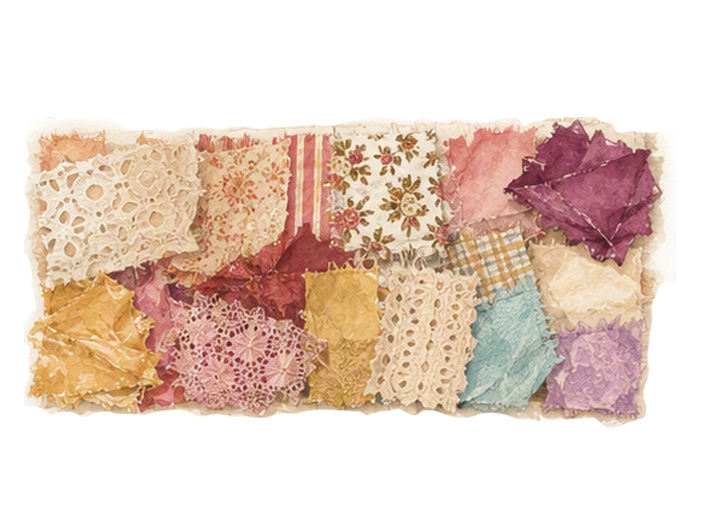
Fabrics/textiles: Materials were reimagined from old soft furnishings like bedding and curtains, old clothes, previous half made projects and scraps.
Salvedged Belts and Buckles: rescued from suitcases, bags and pre-loved belts.
The trousers are made from a diverse selection of recycled and repurposed textile materials. The fabrics were sourced primarily from leftover and waste materials from the M.W.A.M workshop and Maria’s personal collection of fabric scraps, which included unused remnants from previous sewing and design projects, old clothes, cloths and soft furnishings. The materials consist of a mix of cotton and cotton mix, polyester and acrylic blends, lace, and decorative fabrics, varying in texture, thickness, and transparency. Many of these fabrics had no prior final use and would otherwise have remained unused or have been discarded, while others may have originated from offcuts of earlier garments or textile work. There are no specific certifications (such as organic or fair-trade labels) for the materials. However, the project puts its focus on sustainability through reuse, extending the life cycle of existing textiles and reducing waste.
Eco-responsible Methods:
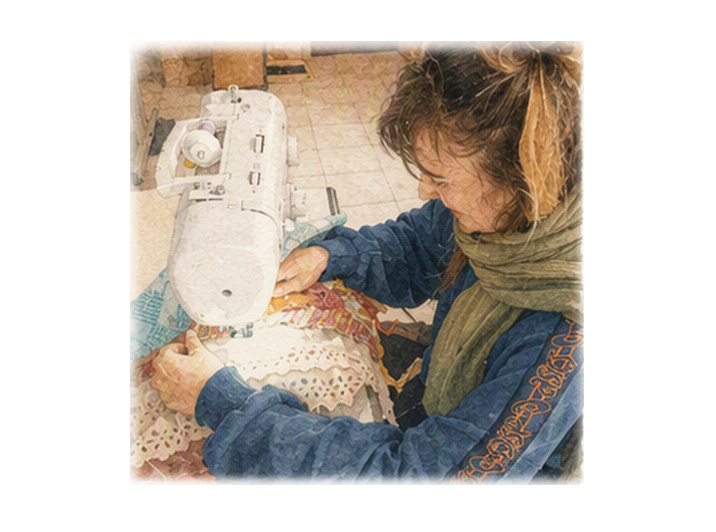
The creation of the trousers had a strong focus on upcycling and waste reduction. All materials used were recycled or leftover fabrics, sourced from previous projects and personal collections, preventing unused textiles from becoming waste. By repurposing these materials, the project actively extends the life cycle of existing resources. Although electrical sewing machines were used, this garment was heavily constructed by hand power.

The process
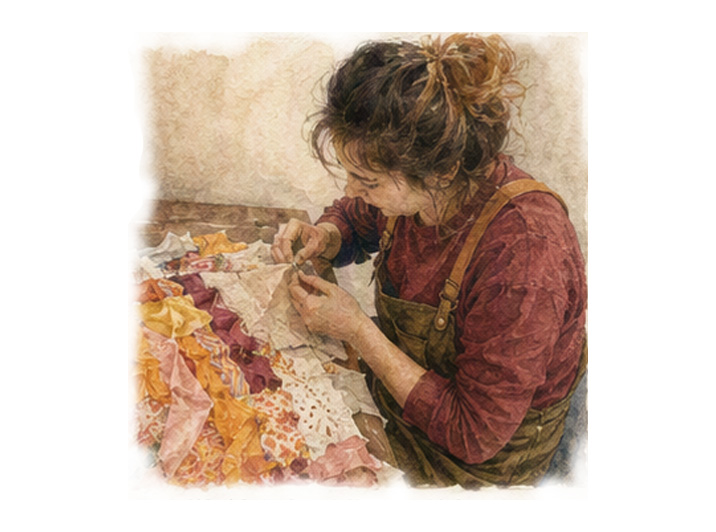
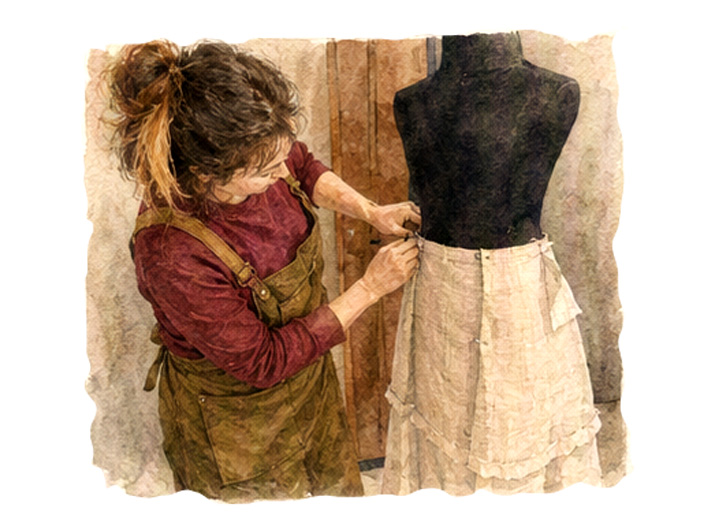
Participants began by selecting recycled and leftover fabrics, working within a shared colour palette that has been decided from the collective Muse moodboard. The participants developed an individual panel using an intuitive approach, focusing on texture, layering, and abstract storytelling. The pieces were first arranged and hand-stitched onto base panels to allow flexibility and adjustments. Once the compositions were finalized, they were secured using sewing machines. The process involved a high level of manual work and experimentation, encouraging participants to explore materials freely, with joyous intent and develop confidence with sewing techniques. Challenges included limited time, organizational constraints, which required continuous adaptation during the sessions. The process also had to remain flexible depending on the number of participants present, making coordination and time management an important part of the work.
Our Team
The whole is much more than the sum of it’s part. Meet our team!
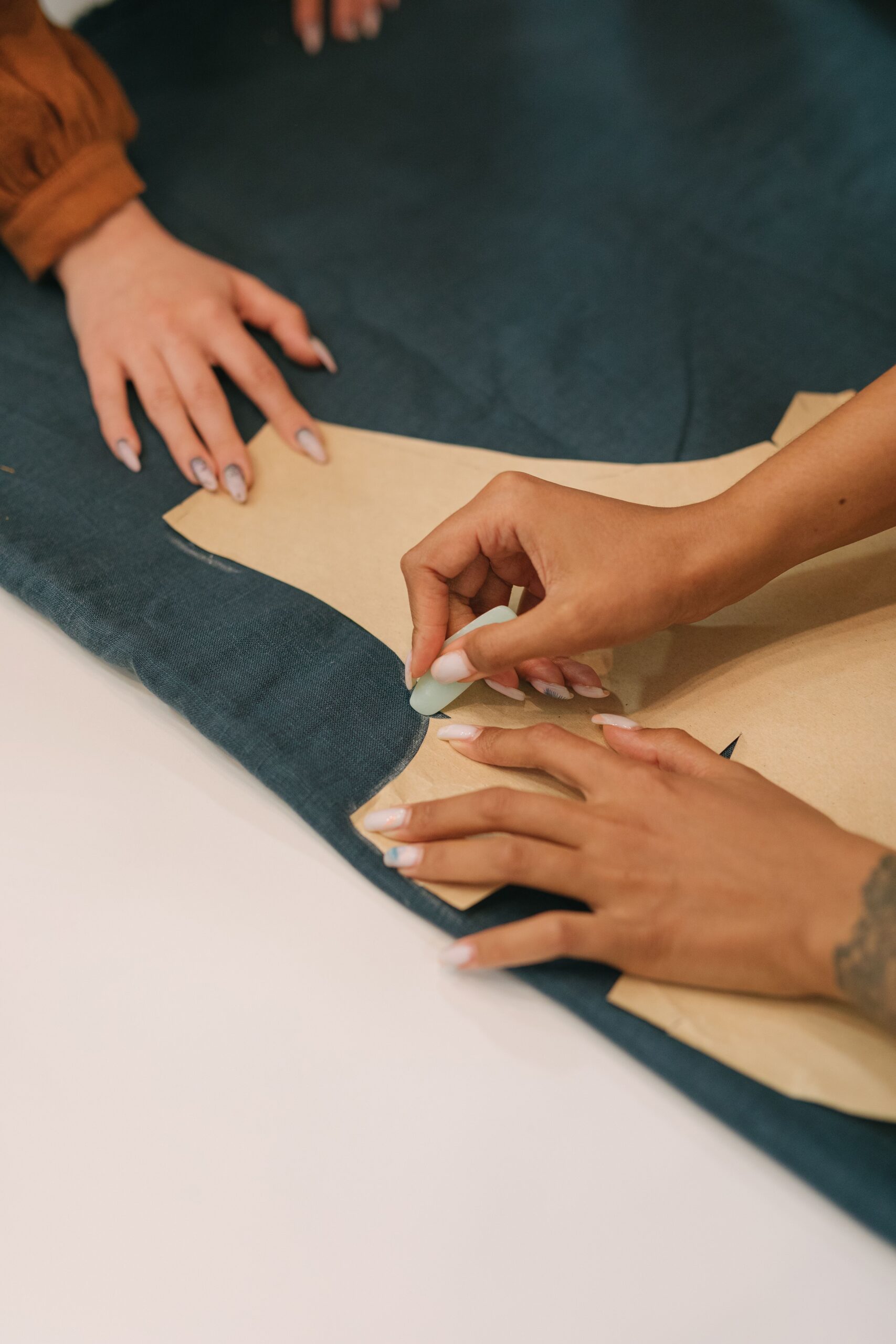
Users Participating in the project
migrant and refugee women

Maria Wright
SUPERVISOR
Born in Malta in 1986, Maria Wright is a multidisciplinary artist, fashion designer, award-winning actor and director, whose work moves fluidly across disciplines and mediums. Sewing, which she began in early childhood, continues to be a foundational element of her artistic practice. Creating something out of nothing, reimagining the ordinary and discarded, became her vocation.


With the support of the Creative Europe Programme of the European Union
Funded by the European Union. Views and opinions expressed are however those of the author(s) only and do not necessarily reflect those of the European Union or the European Education and Culture Executive Agency (EACEA). Neither the European Union nor EACEA can be held responsible for them.