

Malta
Deadweight
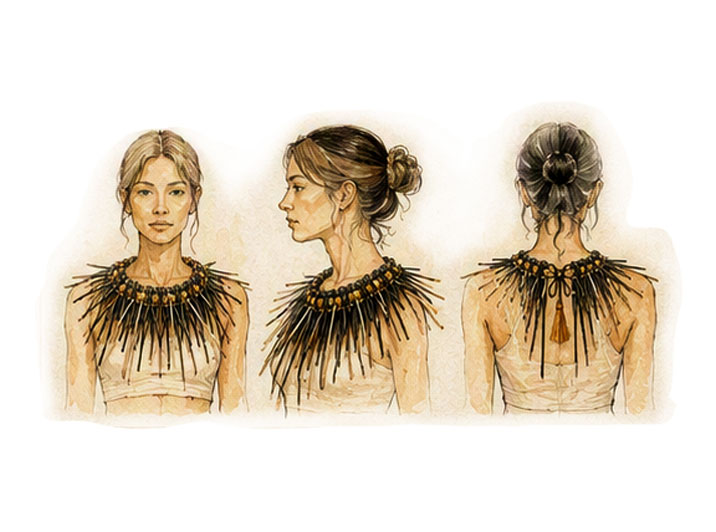
Inspired by the creative exchanges with the Belgian team, this neckpiece translates the “darkness” of the collection into a brutal, warlike collar. Constructed entirely from industrial waste streams, the design relies on manual engineering and hand-knotting rather than adhesives or stitching. It serves as a stark, structural representation of resilience within the MUSE Project.
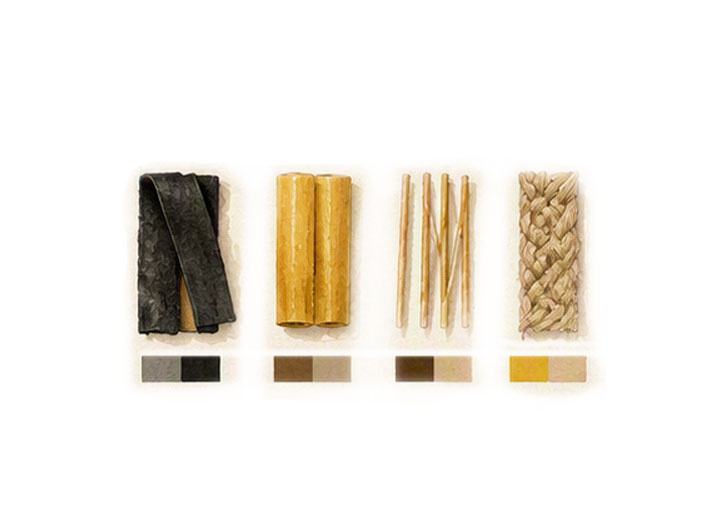
Deadweight by Tonya Lehtinen is a sculptural neckpiece made entirely from industrial waste: pallet ties, cable ties, and recycled bicycle tubes. Built by hand without stitching or glue, it transforms discarded materials into a bold statement of resilience. Inspired by migrant women’s stories and traditional neck adornments, the piece reimagines protection and strength through a “warrior” figure. Its use of rubber also reflects on colonial histories tied to global migration. Both sustainable and symbolic, Deadweight turns waste into a powerful form of resistance and renewal.
Rather than frivolous decoration, this piece references the significant neck adornments found in indigenous tribes and cultures worldwide. The choice of rubber is intentionally symbolic; the history of rubber production is deeply intertwined with colonialism and geopolitics—forces that remain direct drivers of global migration and the displacement of people today.
Material is reused, recycled and sustainable. The Bicycle Tubes are salvaged from local rentals; diverted from landfills where they are typically non-recyclable.
The pallet Ties are foraged from local hardware stores.
The cable ties are sourced from retired industrial deadstock; selected for their ability to be unlocked and reused.
“Eco-responsible Methods:
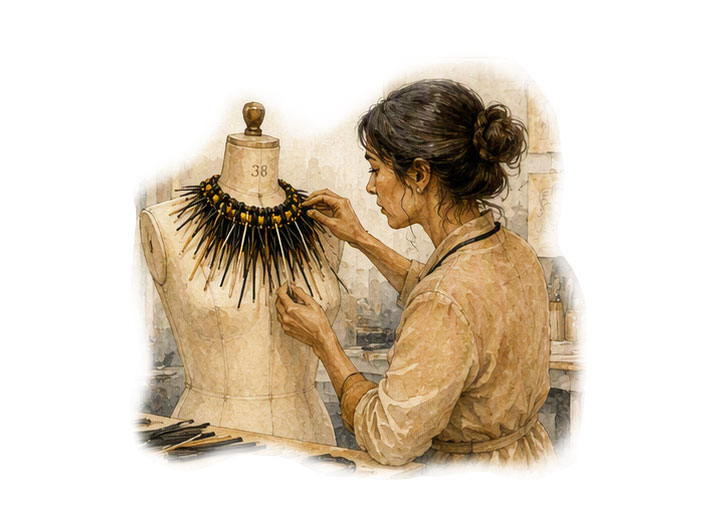
The construction required zero energy-intensive tools, glues, or chemical stabilizers. By utilizing manual knotting and foraged industrial waste not typically marked for recycling, the project demonstrates a high-impact, low-carbon approach to garment engineering.


The process
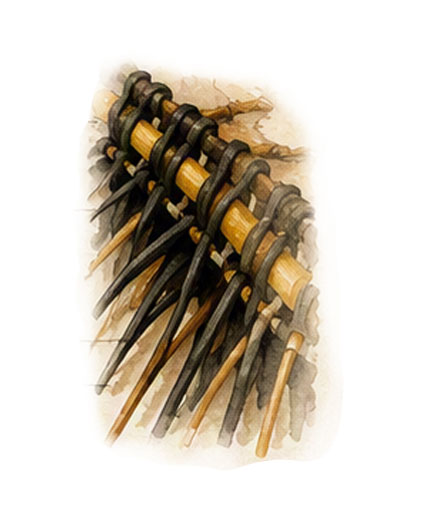
The collar’s structure is engineered by binding salvaged pallet ties with cable ties to form rigid rings. These rings are then layered and secured manually. The “feathers” of the collar are made from bicycle tubes, cut into strips to mimic leather, and secured using nautical half-hitch knots. This ensures the piece is stable yet fully deconstruct able. The process was entirely manual, requiring no specialized tools beyond scissors, and emerged from experimental iterations with various plastic and other waste streams. The objectives of Task 3.1 have been met by the collaborative search for design solutions for the construction without minimising the deliberate brutalist aesthetics. By engaging with the Belgian team’s visual references, participants learned to apply visual language and composition to non-traditional materials. This process enhanced their awareness of how visual storytelling can transform raw, industrial waste into a contemporary artistic statement that aligns with the “Darkness into Light” theme of the capsule collection.
Our Team
The whole is much more than the sum of it’s part. Meet our team!
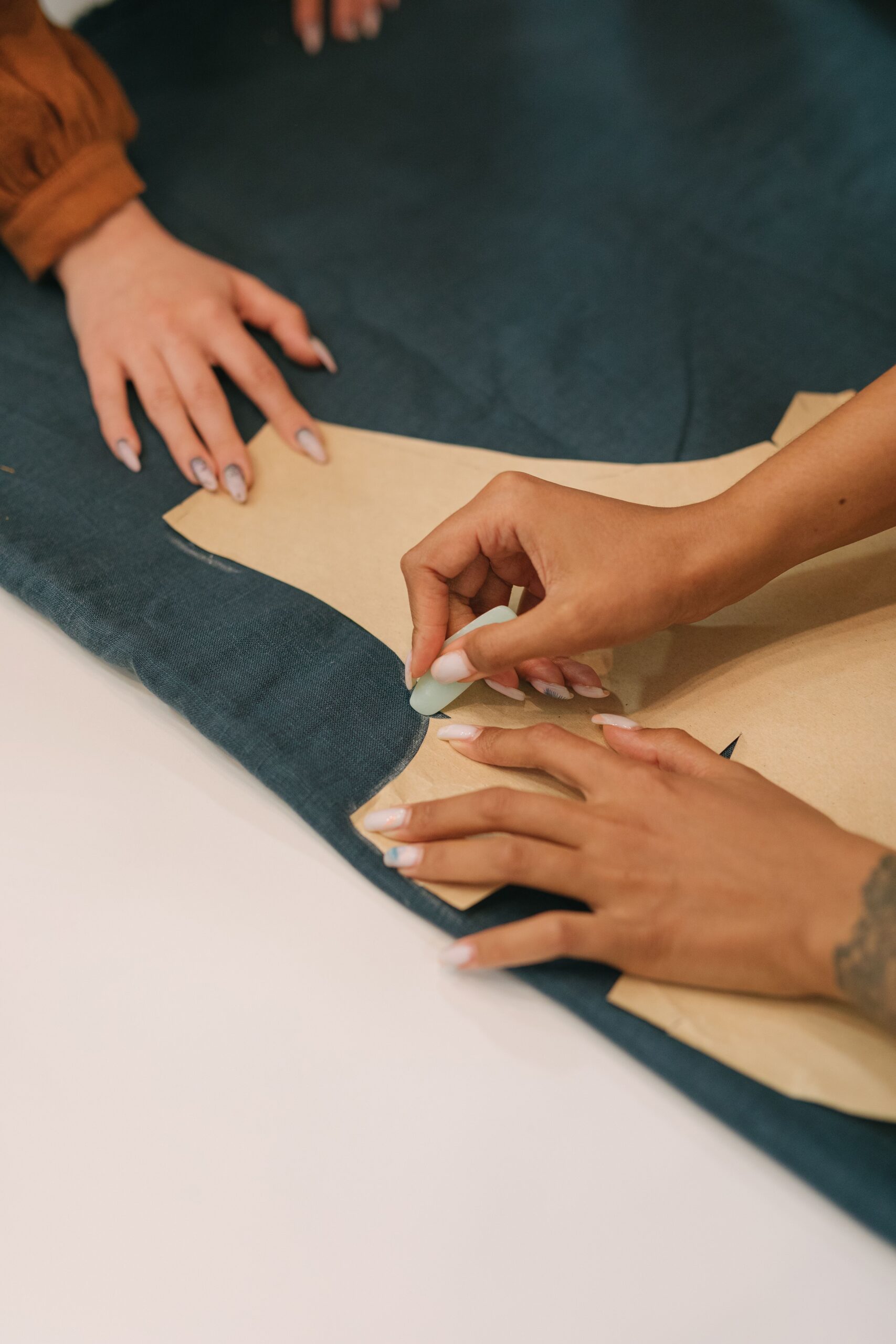
Users Participating in the project
migrant and refugee PEOPLE

Tonia Lehtinen
SUPERVISOR
Tonya Lehtinen holds a BA in Graphic Design and is the founder of Vogue Xchange, a social enterprise dedicated to circular fashion. Her work centres on the intrinsic value of textiles as a catalyst for social and environmental change. As an activist, Tonya exposes the inequities of the fast-fashion industry through community-led education.
She manages the resale of pre-owned clothing and facilitates creative workshops specializing in upcycling,
botanical dyeing, and other regenerative practices.


With the support of the Creative Europe Programme of the European Union
Funded by the European Union. Views and opinions expressed are however those of the author(s) only and do not necessarily reflect those of the European Union or the European Education and Culture Executive Agency (EACEA). Neither the European Union nor EACEA can be held responsible for them.