

BELGIUM
W(e)aving Together
A co-creative garment worn by two people, constructed around a 3-meter handwoven textile developed collectively throughout the project. Draped around two bodies, the piece explores interdependence, movement, and emotional connection. The back integrates drawings by participant Jonathan, transformed through printing, embroidery, and painting techniques. Through colour, weaving, and collaboration, the piece represents a passage from darkness to light.
“W(e)aving Together” is a co-creative garment worn by two people, built around a 3-meter handwoven textile created collectively during workshops. The piece explores connection, interdependence, and shared movement, while incorporating participant Jonathan’s drawings through embroidery, printing, and fabric painting. Combining traditional textile techniques with collaborative and sustainable processes, the work reflects themes of mental health, collective care, and a journey from darkness to light.
The piece connects to textile heritage through the use of handweaving, embroidery, and manual surface treatments while reinterpreting these techniques within a participatory and performative context. The communal weaving process recalls traditional collective textile practices, where making is linked to social interaction and shared knowledge. By transforming collaborative gestures and personal drawings into a wearable artwork, the piece bridges craft traditions with contemporary reflections on mental health, human connection, and collective care.
The piece incorporates handwoven textiles, embroidery threads, printed fabrics, and resourced textile materials collected throughout the project. Various yarns and fabrics used during the weaving and transformation processes originated from leftover or surplus textile materials whenever possible. The garment was developed through slow and collective textile processes centered around handweaving, embroidery, and manual fabric transformation techniques. Existing materials and textile leftovers were prioritized to support reuse and reduce waste. The project emphasizes craftsmanship, experimentation, and low-impact making processes.

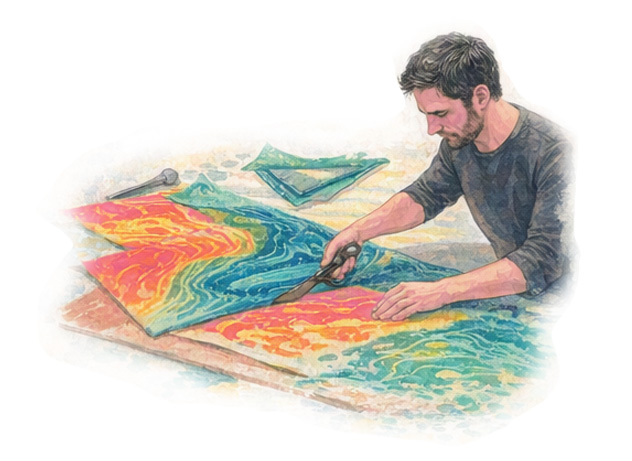
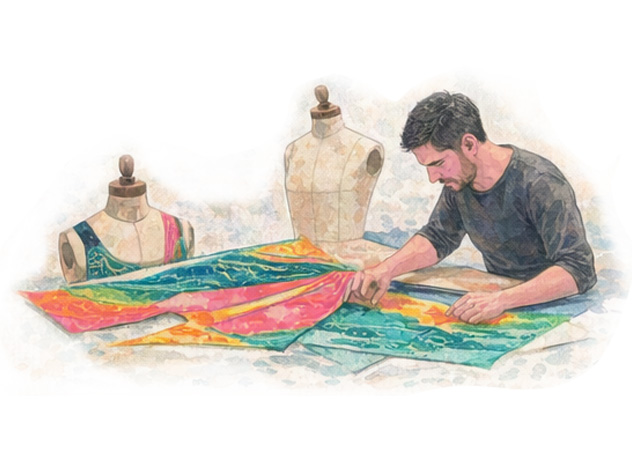
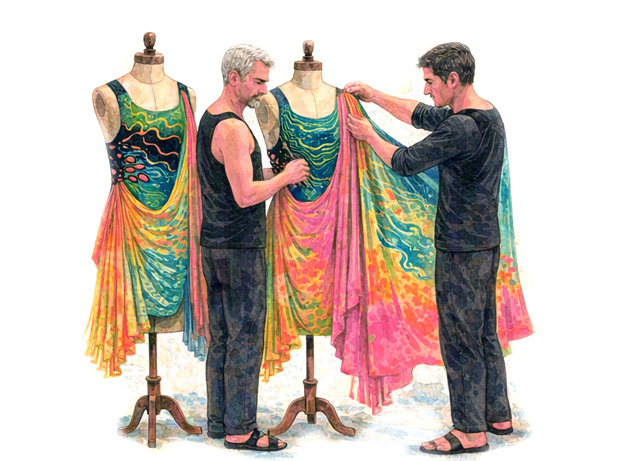
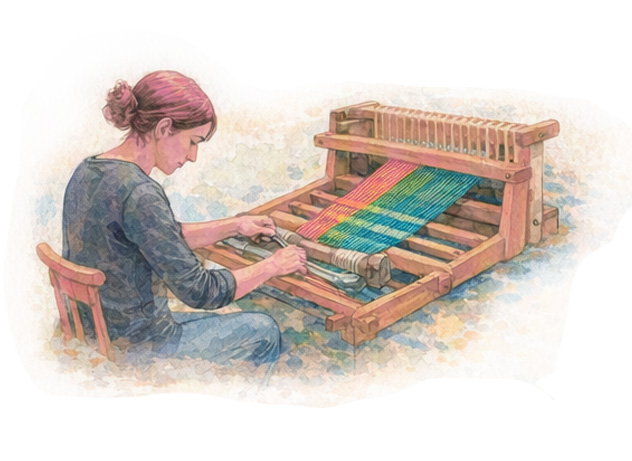
The process
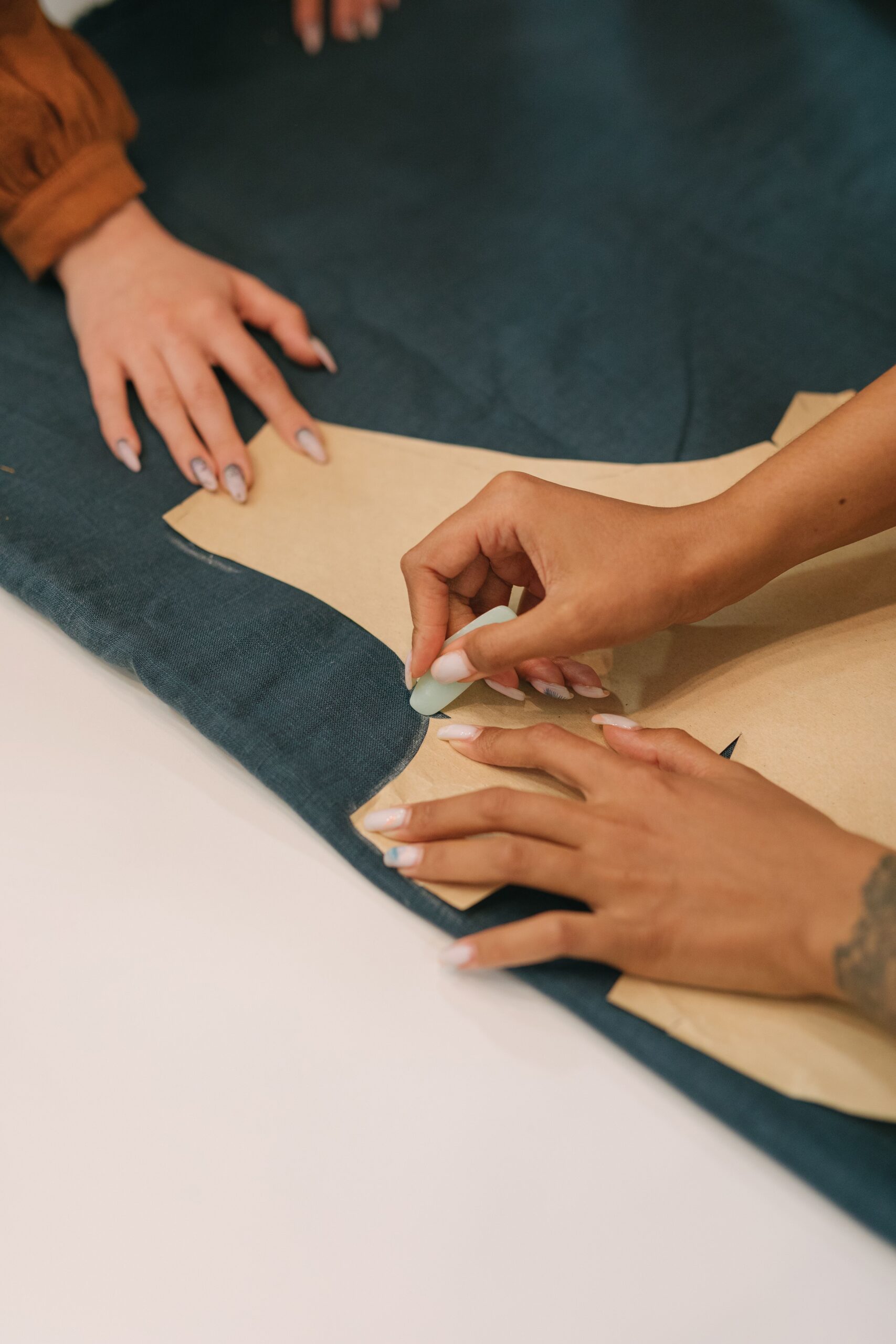
The garment is built around an approximately 3-meter-long handwoven textile featuring a wavy pattern. The woven fabric was draped onto a corset structure shared by two bodies, allowing the textile to bind and connect the wearers physically.
The back of the garment incorporates drawings by participant Jonathan, which were reinterpreted through transfer printing, embroidery, and fabric painting. Different textile interventions overlap and respond to one another, creating a layered visual dialogue. The making process evolved collectively and intuitively through ongoing exchanges, shared experimentation, and the atmosphere of the communal workspace.
Our Team
The whole is much more than the sum of it’s part. Meet our team!
Users Participating in the project
Jonathan Nyakarashi (drawings for the printing)

Louise Limontas
SUPERVISOR
Louise Limontas is a Brussels-based textile designer and artist. With experience in both industrial and craft textile techniques—such as weaving, knitting, printing, embroidery, rope-making, and lace-making—she explores their boundaries and potential fusions. Using yarns as a narrative base, her work focuses on the body and the home through textiles, revealing the intimate connection between them. Her practice is rooted in material sensitivity and sustainability, frequently using resourced materials, including leftover yarns and textile waste from companies. By recontextualizing these discarded materials, she develops tactile, sculptural pieces that reflect on care, transformation, and the emotional dimensions of everyday environments.


With the support of the Creative Europe Programme of the European Union
Funded by the European Union. Views and opinions expressed are however those of the author(s) only and do not necessarily reflect those of the European Union or the European Education and Culture Executive Agency (EACEA). Neither the European Union nor EACEA can be held responsible for them.