

Malta
Circle of Unity
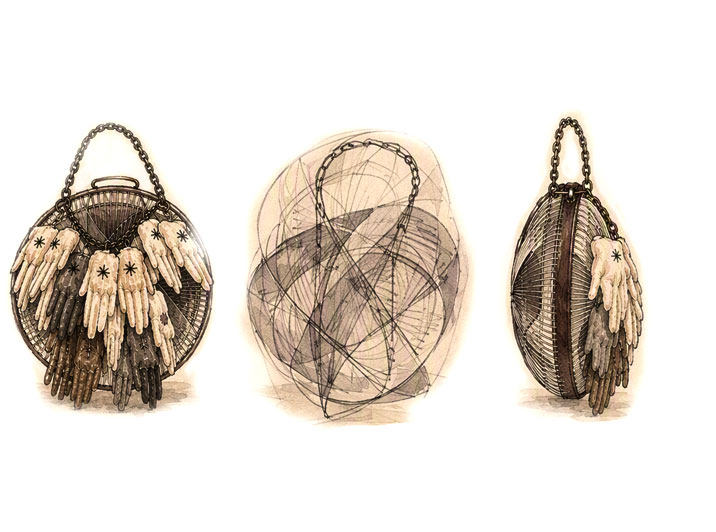
“Circle of Unity” is a conceptual garment that transforms industrial waste and reclaimed textiles into a narrative of resilience. Centred around a sculptural oblate spheroid, the piece explores the tension between entrapment and liberation. It serves as a core contribution to the MUSE Project by highlighting the intersection of sustainable craftsmanship and the lived experiences of displaced women.
“Circle of Unity” is a conceptual garment made from reclaimed materials, exploring themes of entrapment, resilience, and hope. Built from welded industrial fans into a cage-like sphere, it symbolizes both confinement and the possibility of liberation.
The translucent hosiery stretched over the structure allows light to pass through, suggesting visibility and hope even within restriction. Hand-stitched elements like birds and hand motifs represent freedom, identity, and personal migration stories, with movement bringing the piece to life.
Drawing on Mediterranean symbolism—especially the protective hand—and feminine materials like stockings, the work connects ideas of cultural heritage and empowerment.
Sustainability is central, with all components repurposed from waste and assembled using low-impact, handcrafted techniques, transforming discarded materials into a meaningful narrative.
During our workshops, the symbol of the hand was identified by many participants as a primary tool for human expression and a testament to their capacity for transformation. Alongside hand-stitched birds representing flight and autonomy, the hand became a central motif for freedom and celebration.
The use of hosiery to cover the industrial frame links the piece to the feminine experience. For the women of the MWAM (Migrant Women Association Malta) community, who have shared histories of gender inequality, these materials represent newfound agency. Historically a staple of menswear, the stocking evolved into a feminine garment as women gained greater autonomy; here, it stands as a symbol of self-expression and reclaimed power.
The work further connects to Maltese and Mediterranean heritage through the Hamsa or Hand of Fatima, a traditional symbol used for protection against the “evil eye.” By crafting numerous hands from waste fabrics and suspending them from industrial chains, we recontextualise this ancient amulet. Layered to create fluid movement, these hands embody the collective stories and journeys of the participants.
This piece addresses fundamental artistic elements through the lens of radical sustainability. Our participants demonstrate exceptional innovation in repurposing waste; while this practice often stems from necessity, it has fostered a critical artistic eye. By assessing the aesthetic value of a discarded fan and connecting their personal histories to its form, the participants find symbolic resonance in the act of “escaping the cage”—transforming oppression into a supportive, creative community.
SUSTAINABILITY & ECO-RESPONSIBILITY
Materials Used
- Reused
- Recycled
- Sustainable
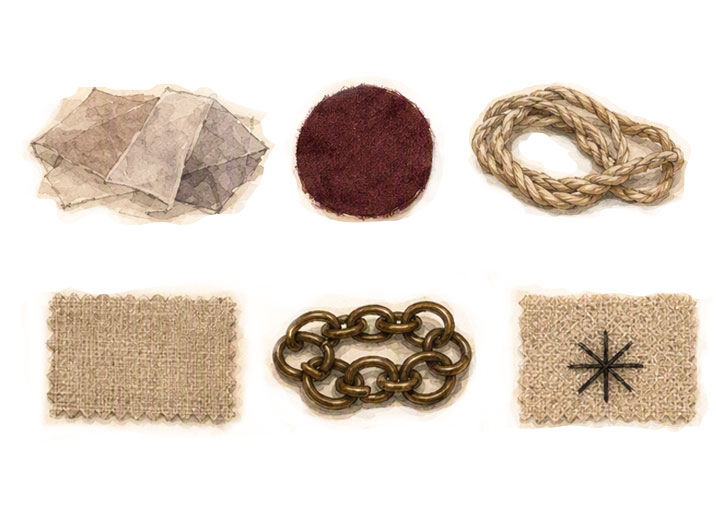
• Industrial Fans: Salvaged from waste streams and welded into a circular frame; their status as waste serves as a commentary on global warming.
• Hosiery: Sourced from vintage deadstock.
• Wool Beading: Reclaimed from a personal archive of vintage textiles.
• Cotton for Hands: Repurposed from discarded bedding and table linens.
• Stuffing: Salvaged from end-of-life puffer garments.
• Chain: Repurposed keyrings salvaged from event lanyards.
Eco-responsible Methods
Every component of this garment was diverted from a waste stream. The industrial fans were the only elements requiring structural modification, achieved through the skills of a local blacksmith to prevent the materials from entering a landfill. All other construction methods—such as hand-stitching and intricate assembly—were low-impact and energy-efficient.
The pallet Ties are foraged from local hardware stores.
The cable ties are sourced from retired industrial deadstock; selected for their ability to be unlocked and reused.
“Eco-responsible Methods:
The construction required zero energy-intensive tools, glues, or chemical stabilizers. By utilizing manual knotting and foraged industrial waste not typically marked for recycling, the project demonstrates a high-impact, low-carbon approach to garment engineering.

The process
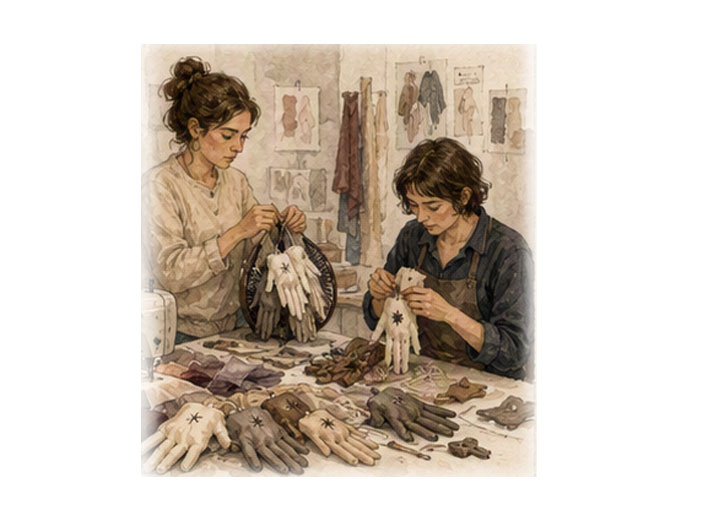
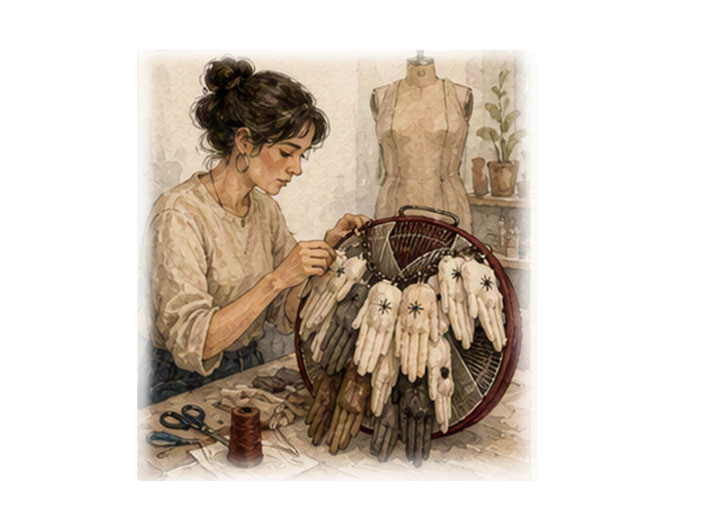
The construction began by welding industrial fans into a cage-like sphere. I stretched hosiery over this frame to create organic shapes, securing them with knots—a process that required constant repairs as panels laddered. Because the structure was enclosed, sewing the wool trims from both inside and out demanded extreme patience and fine motor skills. The rounded form with its curvature naturally bent the fabric into entirely new, unpredictable shapes.
I experimented with various material weights and translucent stockings, layering them to match the “Into Light” colour palette. To find the best placement for the hand and bird tokens, I tested different cord lengths to allow the birds to “fly” as the piece moves. Ultimately, I chose hands adorned with embroidered fingerprints to represent the personal stories of migration and the unique identity of each participant.
This piece addresses fundamental artistic elements through the lens of radical sustainability. Our participants demonstrate exceptional innovation in repurposing waste; while this practice often stems from necessity, it has fostered a critical artistic eye. By assessing the aesthetic value of a discarded fan and connecting their personal histories to its form, the participants find symbolic resonance in the act of “escaping the cage”—transforming oppression into a supportive, creative community
Our Team
The whole is much more than the sum of it’s part. Meet our team!
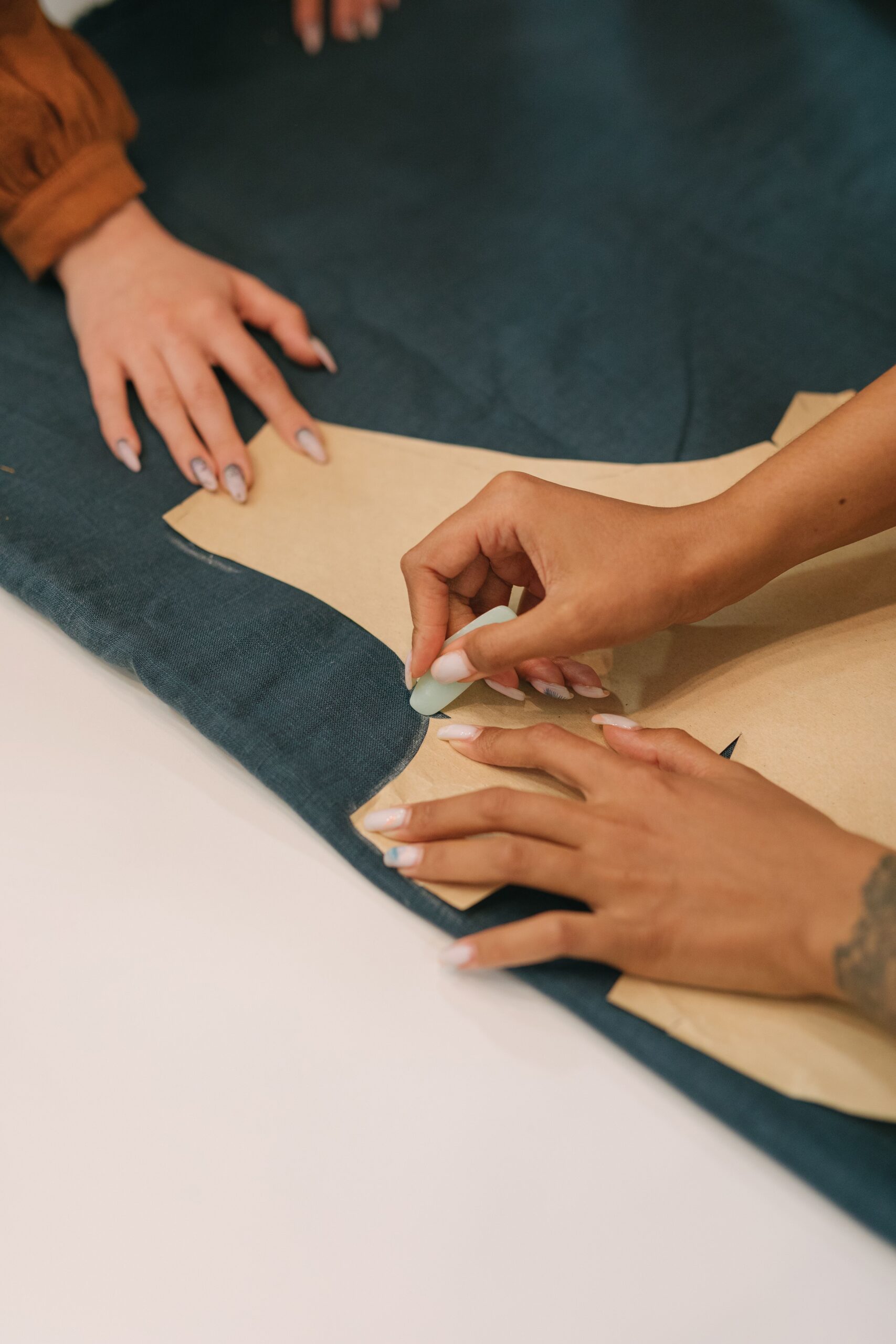
Users Participating in the project
migrant and refugee PEOPLE

Tonia Lehtinen
SUPERVISOR
Tonya Lehtinen holds a BA in Graphic Design and is the founder of Vogue Xchange, a social enterprise dedicated to circular fashion. Her work centres on the intrinsic value of textiles as a catalyst for social and environmental change. As an activist, Tonya exposes the inequities of the fast-fashion industry through community-led education.
She manages the resale of pre-owned clothing and facilitates creative workshops specializing in upcycling,
botanical dyeing, and other regenerative practices.


With the support of the Creative Europe Programme of the European Union
Funded by the European Union. Views and opinions expressed are however those of the author(s) only and do not necessarily reflect those of the European Union or the European Education and Culture Executive Agency (EACEA). Neither the European Union nor EACEA can be held responsible for them.