
UKRAINE
Bress “Landscape”
This voluminous dress is based on the personal story of Maria, who was forced to leave her hometown Oleshky during the occupation. The piece includes her handwritten poem on a light, semi-transparent fabric. A gradient from dark to light reflects loss and hope. The dress explores life between the memory of home and the need to move forward.
The created piece “LANDSCAPE” is a voluminous, semi-transparent dress built around the personal story of Maria, a woman displaced from her hometown of Oleshky during the occupation. Her handwritten poem is inscribed directly onto the fabric, making the garment itself a carrier of memory and voice. A gradient shifting from dark at the hem to light at the top traces a journey from loss toward hope, while asymmetrical dark ribbons woven into the silhouette symbolize broken connections — to home, to place, and to people left behind. A subtle marine quality permeates the form, echoing Maria’s memories of the Dnipro River, the sea, and open southern landscapes. The dress exists at the threshold between memory and a new beginning — a wearable inner landscape suspended between what was left behind and what lies ahead. By integrating personal narrative directly into the material, the piece transforms clothing into an intimate archive of lived experience. While rooted in one woman’s story, the dress speaks to a condition shared by many — living between a past that cannot be returned to and a present still being built. In the context of the ongoing war, it becomes a symbol of collective displacement, resilience, and the emotional weight of home. The materials used are SUSTAINABLE with a focus on manual processes, conscious use of resources, and minimal waste production.
This work reflects the current Ukrainian experience of war, displacement, and emotional connection to home.
It speaks about a condition many people live in today — between memory and the need to rebuild life. Through the combination of text, material, and form, the dress becomes more than clothing. It becomes a carrier of personal and shared stories.
This work is not about one person only. It reflects the experience of many people living between past and present.
This is not only practical help for the military but also a sign of responsibility, solidarity, and care.
In this work, this process is transformed into an artistic form. The bag becomes not just an object, but a carrier of memory, experience, and shared responsibility.
Materials used are SUSTAINABLE and the work is created with a focus on manual processes and conscious use of materials. The production minimizes waste and works with available resources.

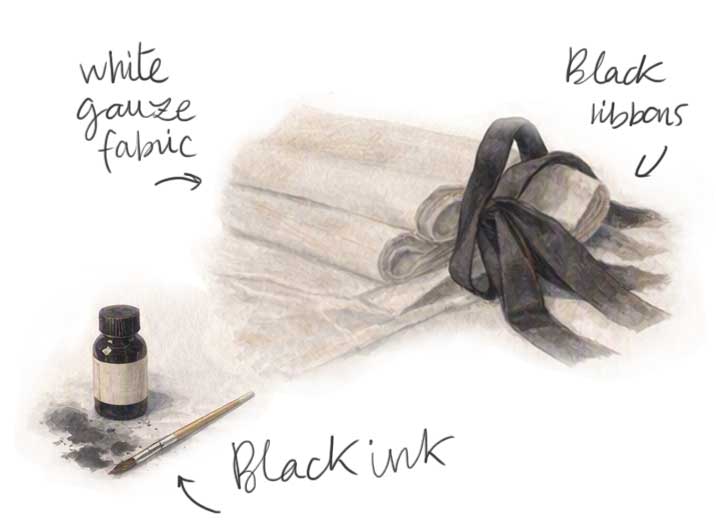
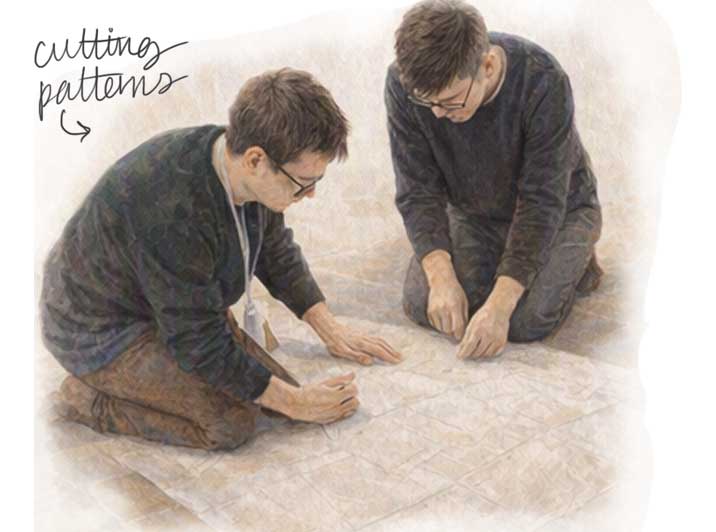
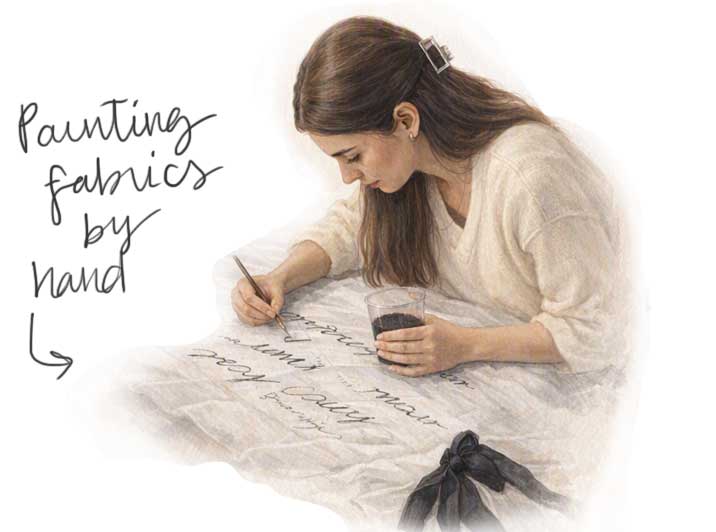
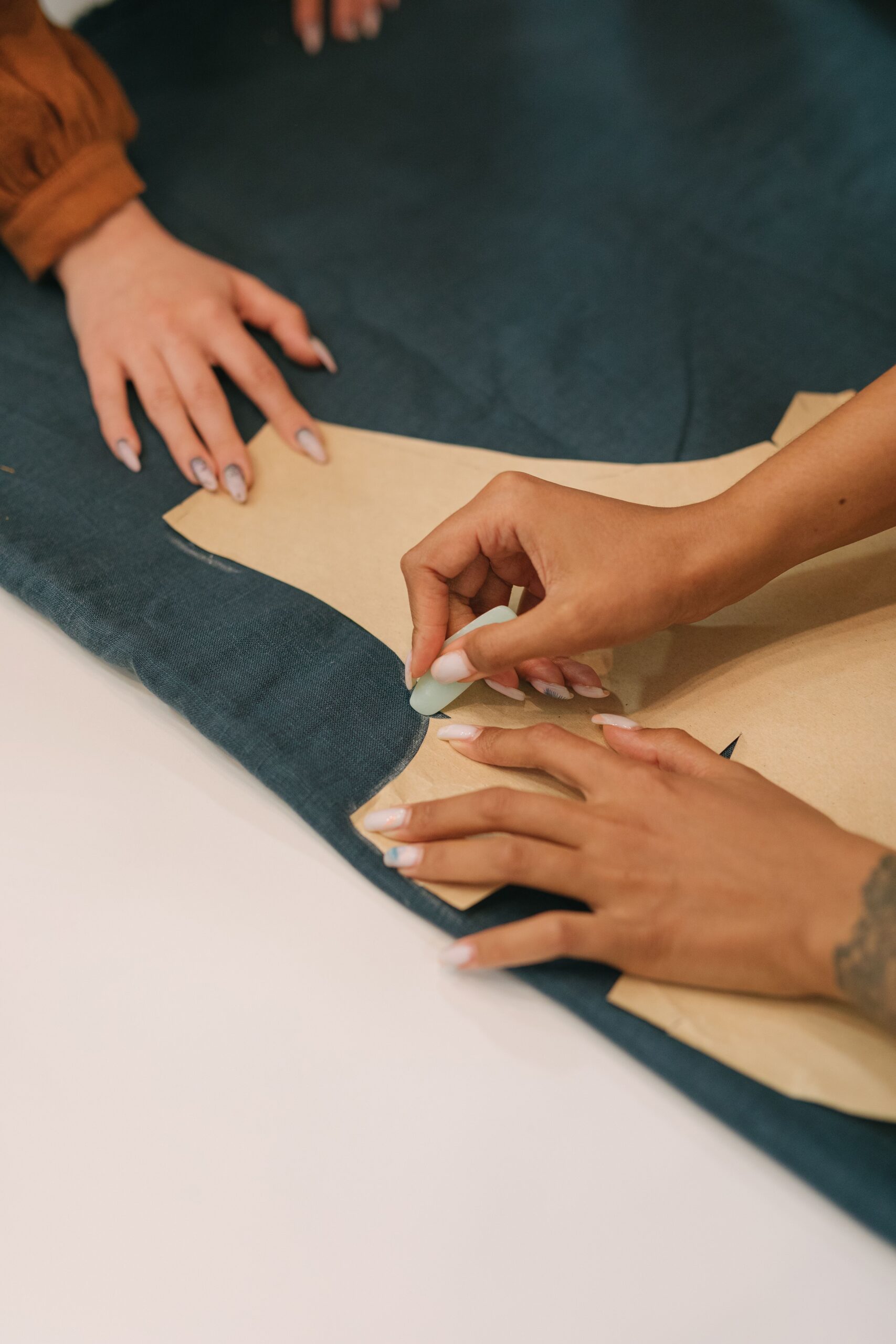
The process
The dress is made from a light, semi-transparent fabric that carries the handwritten text of Maria’s poem. This allows the garment to combine material form with a personal narrative.
The structure of the dress is based on a gradient from dark to light. The darker lower part reflects the experience of occupation, loss, and uncertainty. The lighter upper part represents hope, movement, and a new stage in life.
Asymmetrical dark ribbons are integrated into the form, symbolizing broken connections — with home, place, and people. In its form and details, a subtle marine feeling can be sensed, referring to the south, the wind, and open space.
The dress has a deliberately voluminous shape, emphasizing its presence as both a garment and an art object.
Our Team
The whole is much more than the sum of it’s part. Meet our team!
Users Participating in the project
maría

Yarina Stoliar
SUPERVISOR
Yaryna Stoliar is a designer from Ukraine and the founder of a modern embroidered clothing brand. In her work, she reinterprets traditional Ukrainian clothing in a contemporary way. She combines original designs, machine embroidery, and cultural references. Her inspiration often comes from Ukrainian literature, history, and heritage, which she transforms into visual forms. For her, design is a way of self-expression, rethinking tradition, and creating something new. Alongside her brand, she also works with different social groups, involving people in creative processes.


With the support of the Creative Europe Programme of the European Union
Funded by the European Union. Views and opinions expressed are however those of the author(s) only and do not necessarily reflect those of the European Union or the European Education and Culture Executive Agency (EACEA). Neither the European Union nor EACEA can be held responsible for them.