

spain
Green Knit Dress
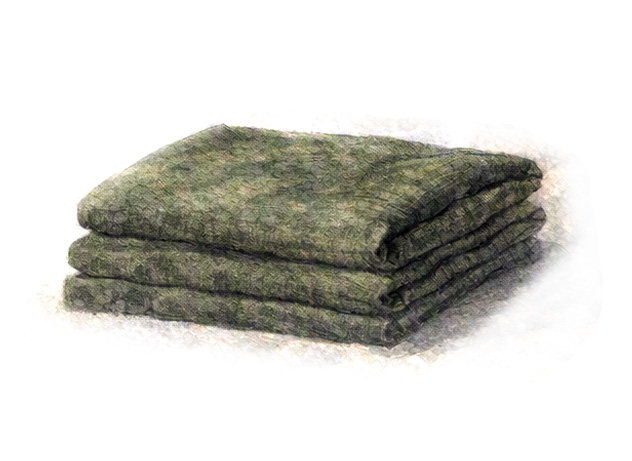
Made from fabric scraps from the Intrás Day Center.
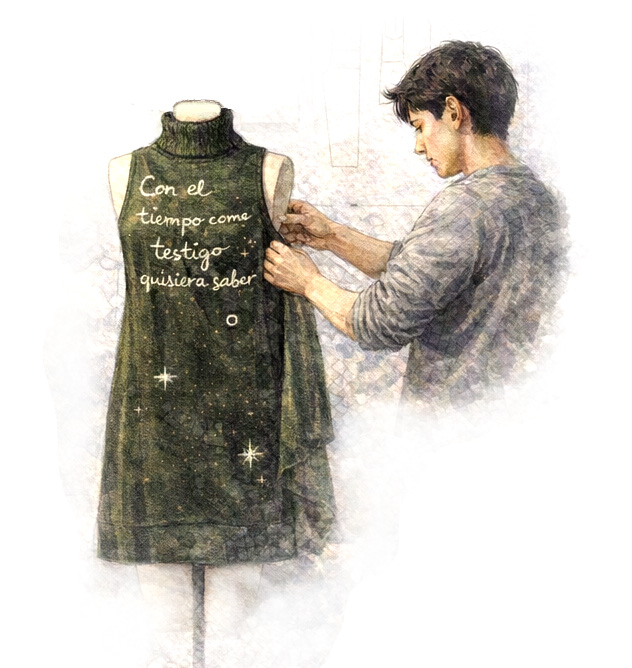
Green knit dress with no arm opening. The dress represents the whole self and identity.
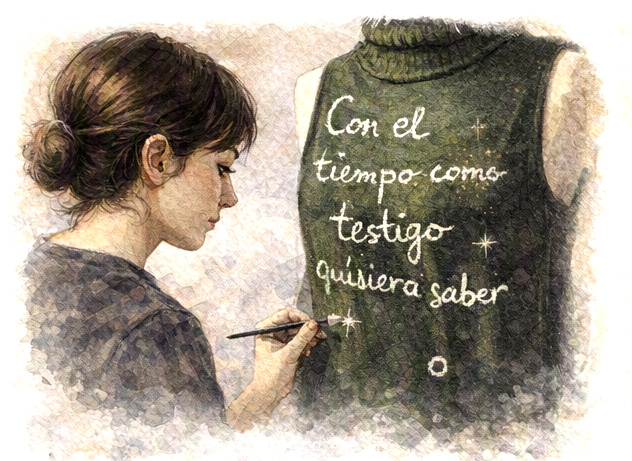
The piece “Green Knit Dress” is a dark green knit dress with no arm openings, made entirely from fabric scraps sourced from the Intrás Day Center. Its most striking feature — the absence of arm openings — is entirely deliberate, as is the choice of a flexible knit fabric and deep, enveloping color. Hand-painted onto the garment is a line from a poem written by Intrás user Chema — “With time as witness, I would like to know” — accompanied by a star painted by Mike, casting a single ray of light across the fabric. The dress is an image of being trapped within oneself. The dark tone evokes internal burial before transformation; the knit fabric reflects a state of emotional flexibility held in tension; and the missing arm openings speak directly to paralysis — the inability to act, to intervene in one’s own life, to express or to break free. At the same time, the garment holds within it the possibility of change: it is the chrysalis before the butterfly, the moment of total containment just before liberation. The painted verse and its accompanying star introduce that first glimmer of light — a whisper of transformation from within the darkness. Part of the experimental fashion project From Darkness to Light, developed with users of the INTRAS Foundation, where design serves as a tool for therapeutic support and social inclusion. The piece connects the symbolic journey from mental illness to social inclusion with the broader cultural heritage of Castile and León, where the overcoming of adversity has long been woven into regional identity. It’s made made entirely from reclaimed knit fabric and reused materials, with zero or minimal waste cutting and a fully conscious, locally ethical production process.
In this part of the experimental fashion project “From Darkness to Light,” developed by users of the INTRAS Foundation, we have used design as a therapeutic and social inclusion tool, deeply connecting it with the local cultural heritage of Castile and León.
The project not only creates garments but also establishes a dialogue with the region’s identity through the symbolism of transition, evoking processes of overcoming adversity that are reflected in local history. It links this transition between the shadows of mental illness and the light of social inclusion, similar to the rebirth of traditions in modernity.
This garments is made with Reused materials – reused knit. All the garments were made using reclaimed materials (deadstock), instead of manufacturing with new fabric. We used certified fabrics with trust seals and upcycled discarded textiles.
When cutting the pieces for each garment, I aimed for zero or minimal waste to avoid creating any unnecessary items. I implemented a conscious production process, making each garment locally and ethically.

The process
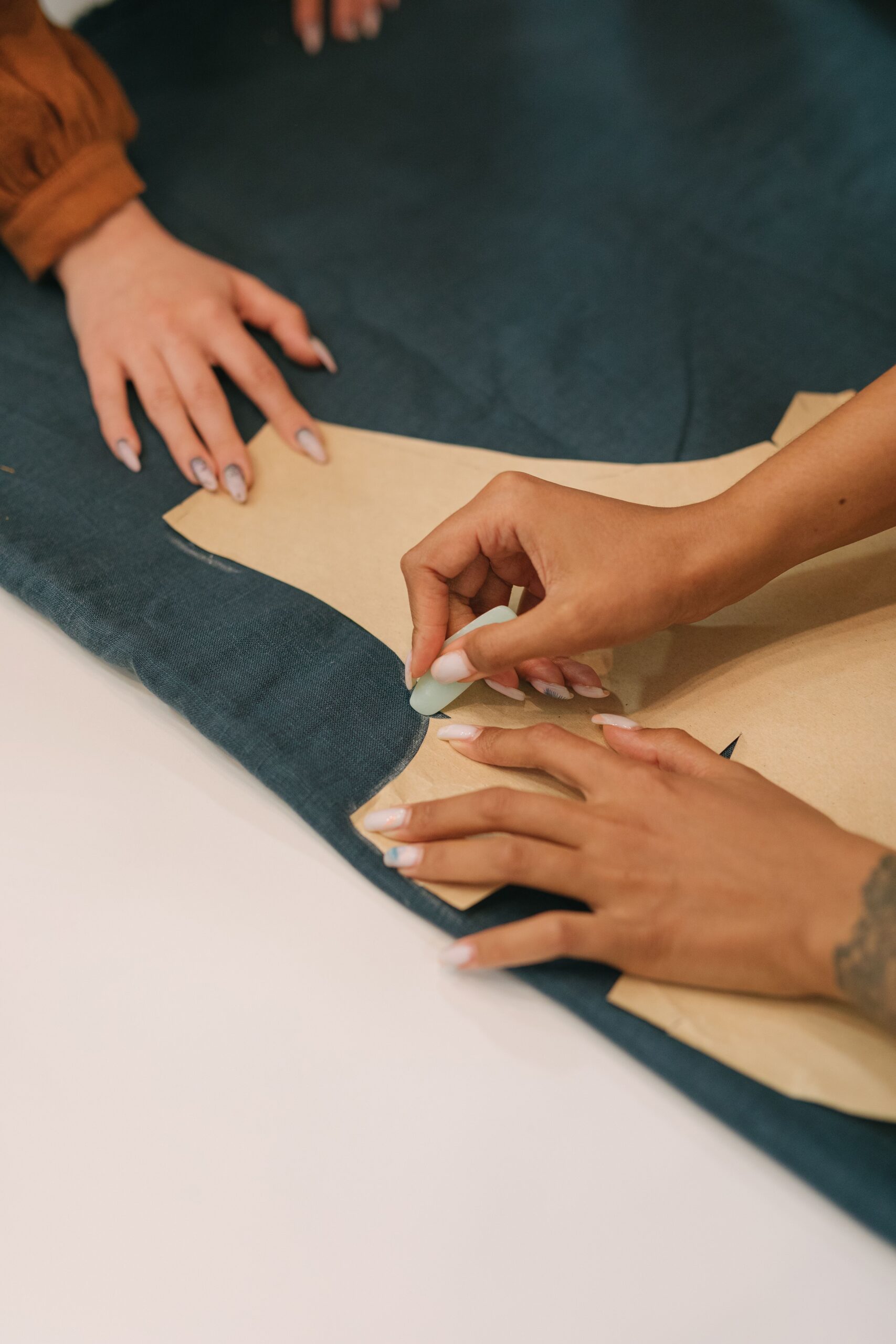
The most complicated part was the design process, sketching to convey the intended
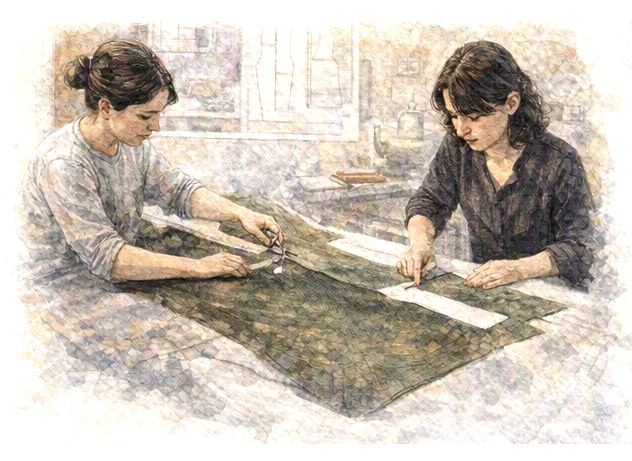
sense of darkness. Once the design was finalized, we moved on to creating the pattern on a table with the corresponding measurements, followed by its construction. We located the appropriate fabric and finally adapted the pattern to the silhouette, making the necessary alterations. Painting it by the users was the most delicate part of the process; they did a fantastic job, as the finished garment made the process more complex.
Our Team
The whole is much more than the sum of it’s part. Meet our team!
Users Participating in the project
Participants from a day center
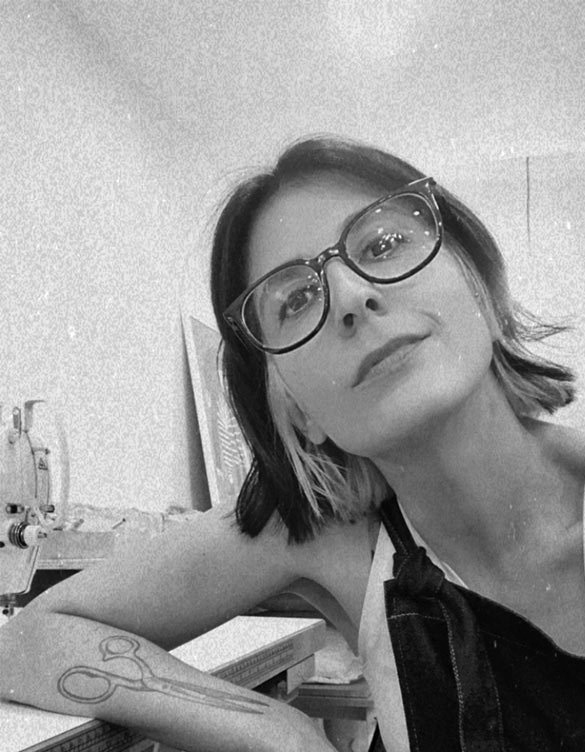
Eulalia Mateos
SUPERVISOR
Fashion designer, artisan, art historian, and professor at ESI Higher School of Design in Valladolid and at the Castile and León Crafts Center. She has her own brand, a brand identified by a unique concept based on contemporary design where each piece is born from careful reflection, seeking its own identity.
We respect the art of craftsmanship, where, by combining modernity, pattern making, lines, tradi-tion, and skill, each piece achieves value.
We are committed to creating fashion consciously—fashion that is accessible, transparent, and responsible. That’s why we work with local suppliers, valuing the knowledge and tradition of the textile sector in our region.


With the support of the Creative Europe Programme of the European Union
Funded by the European Union. Views and opinions expressed are however those of the author(s) only and do not necessarily reflect those of the European Union or the European Education and Culture Executive Agency (EACEA). Neither the European Union nor EACEA can be held responsible for them.