
Malta
Life Line
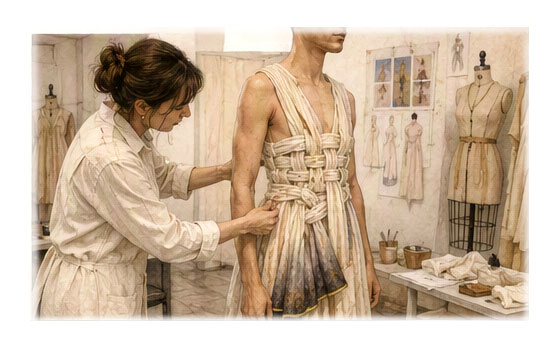
This garment uses weaving and dyeing as universal markers of social inclusion and cultural exchange. By utilizing weaving—a borderless language of identity—the piece reflects the collective journey of the MUSE participants. It serves as a narrative of migration, symbolizing the transition from displacement toward a regained sense of belonging and community integration.
“Life Line” is a textile piece that uses weaving and natural dyeing to explore themes of migration, identity, and belonging. It treats weaving as a universal, borderless language, reflecting the shared experiences of participants and their journey toward community integration.
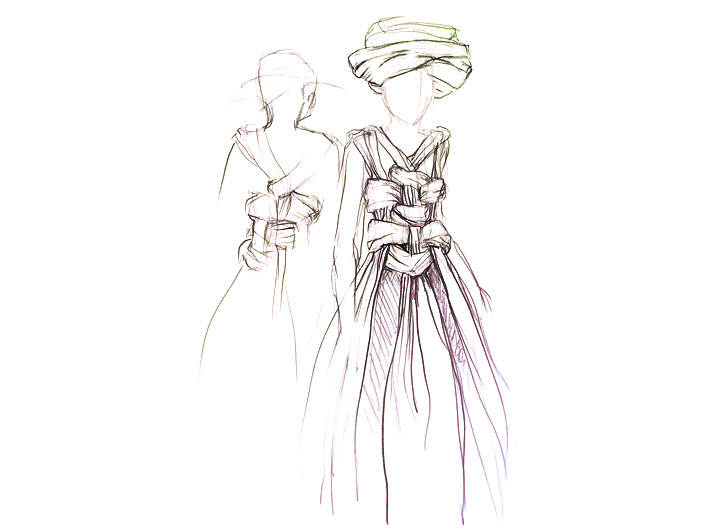
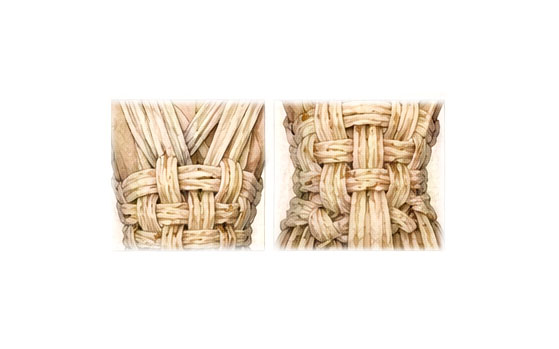
The garment’s design tells a symbolic story: darker, dyed sections represent uncertainty and fear during displacement, while the transition into a clean, tightly woven structure signifies stability and a fresh start. This narrative was inspired by a collaborative workshop where participants physically created a weave together, emphasizing solidarity and collective strength.
Traditional techniques—such as rust dyeing, plant-based dyes, and durable hand-stitching—are combined with experimental, community-led processes. The work also draws on Mediterranean and Maltese textile heritage, referencing historic cotton varieties and traditional clothing forms.
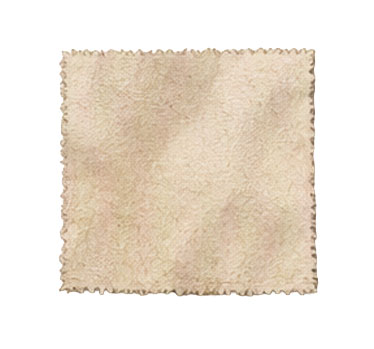
Iron mordanting—using iron-rich mud or water—is an ancient technique across the Mediterranean and Middle East used to achieve deep blacks, greys, and earth tones. This garment pays homage to Malta’s once-flourishing cotton, weaving, and dyeing traditions. The use of raw cotton references Tan-Nankin (a rust-fast hue) and Ta’ Gallipoli (yellow-tinged cotton), varieties native to the region known for their durability in sails and linens. The structure consists of wadded and woven sashes, reinterpreting the traditional Maltese peasant costume. Wrapped and tied around the body, the silhouette comes to life through movement, echoing the core of the island’s history
- Reused
- Recycled
- Sustainable
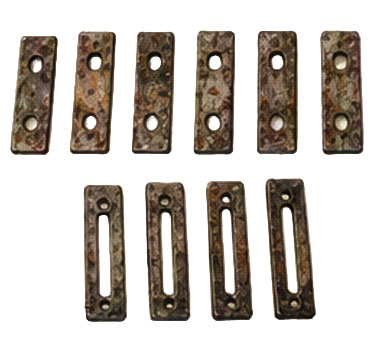
The garment is largely hand-sewn, allowing for easy deconstruction. Components like metal hardware can be removed and reused, while all 100% cotton fabrics are fully compostable at the end of their lifecycle.
Eco-responsible Methods
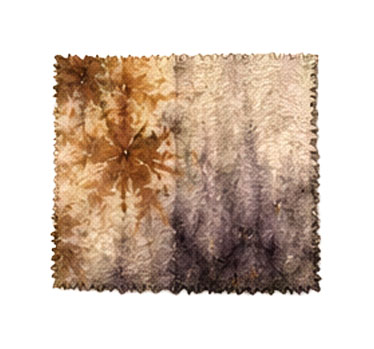
• Rust Prints: 100% natural, cured with salt and vinegar.
• Plant Prints: Created using botanical matter and homemade dyes, mordanted with natural Potash Alum or woad compounds.
• Indigo Trims: Processed in rejuvenated dye vats with no added chemicals. (Note: The original vat was used to revive washed-out garments; while handled responsibly, its initial chemical composition may vary)

The process
Natural rust dye techniques, hand stitching with stitches traditionally used for their strength to secure cotton bales, natural plant dyes, reuse of waste elements. As the project progressed, participants gained the confidence to move from traditional narratives toward abstract expression. The draping and maquette workshops were pivotal, helping them develop a critical eye and translate personal stories into tangible forms. While the challenges of purposeful engineering initially felt restrictive, the objectives established in Session 3 eventually took root. Most participants, previously unexposed to contemporary visual arts, successfully bridged the gap between their cultural heritage and modern artistic practice.
Our Team
The whole is much more than the sum of it’s part. Meet our team!
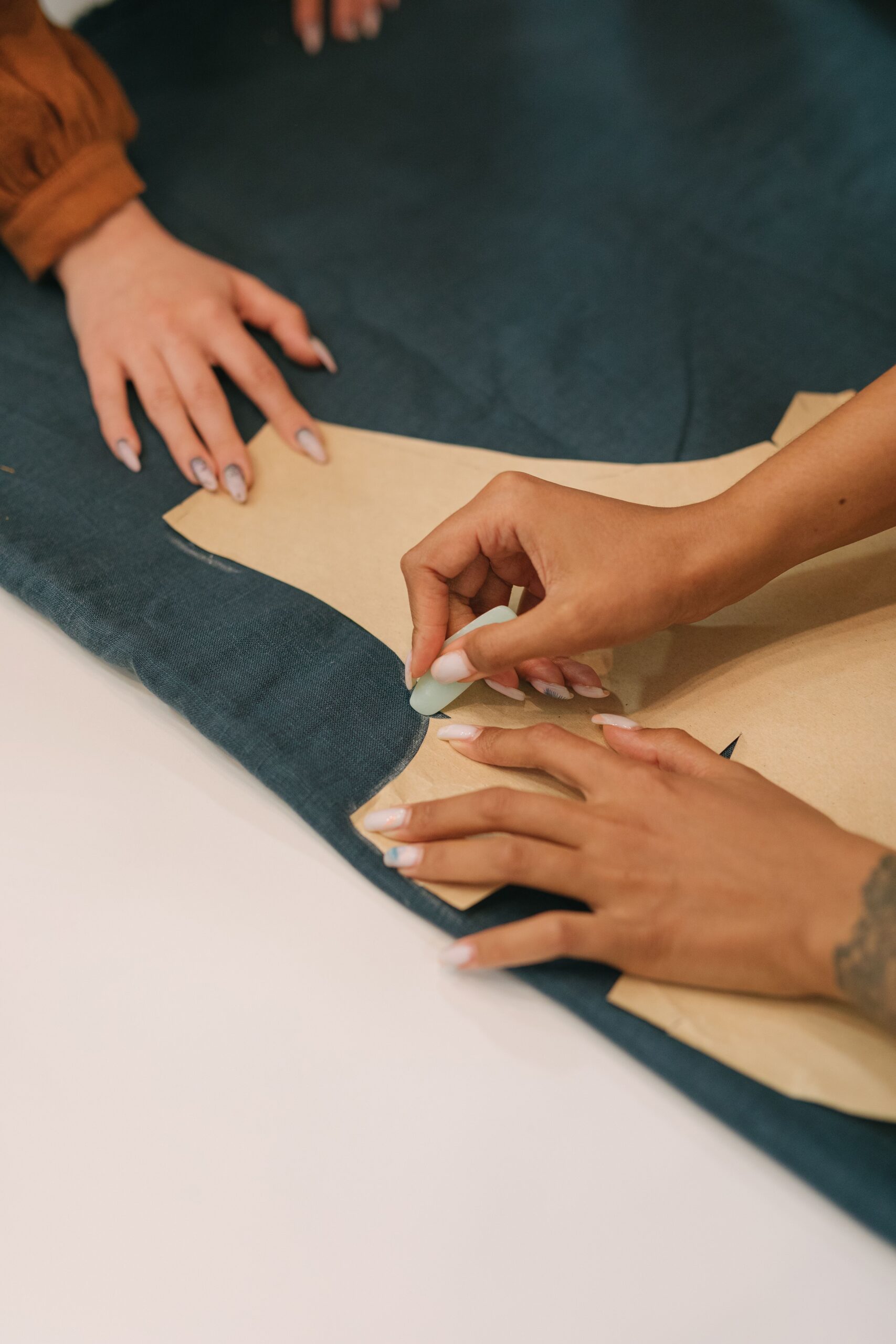
Users Participating in the project
migrant and refugee PEOPLE
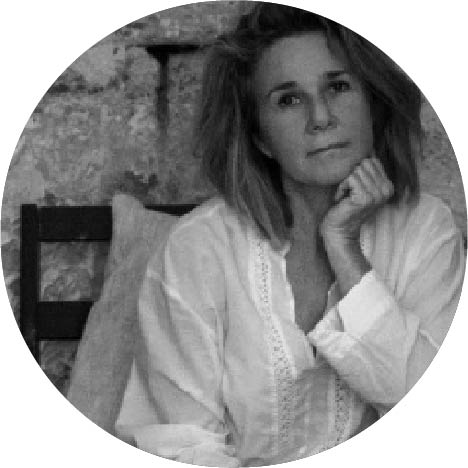
Tonia Lehtinen
SUPERVISOR
Tonya Lehtinen holds a BA in Graphic Design and is the founder of Vogue Xchange, a social enterprise dedicated to circular fashion. Her work centres on the intrinsic value of textiles as a catalyst for social and environmental change. As an activist, Tonya exposes the inequities of the fast-fashion industry through community-led education.
She manages the resale of pre-owned clothing and facilitates creative workshops specializing in upcycling,
botanical dyeing, and other regenerative practices.


With the support of the Creative Europe Programme of the European Union
Funded by the European Union. Views and opinions expressed are however those of the author(s) only and do not necessarily reflect those of the European Union or the European Education and Culture Executive Agency (EACEA). Neither the European Union nor EACEA can be held responsible for them.