

Belgium
Cocoon Coat
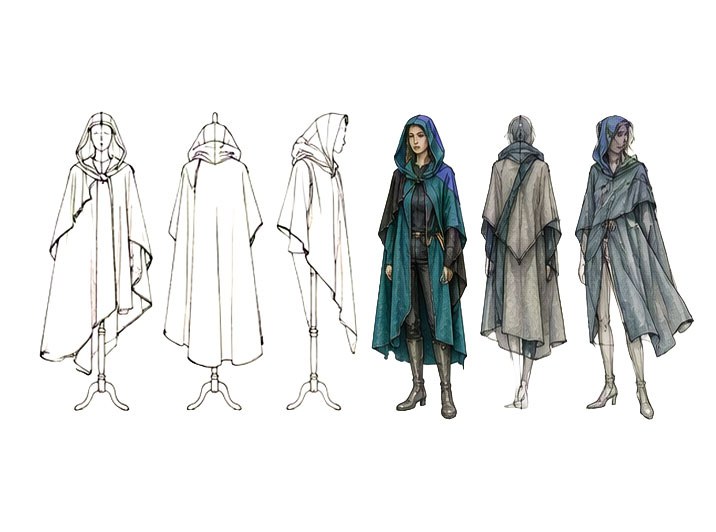
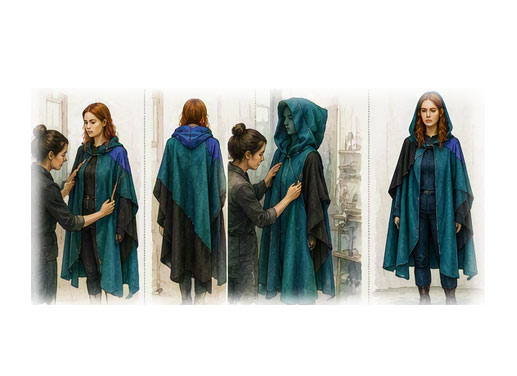
This is an unisex coat with an oversized hood and two oversized panels to tie together the hood serving as a scarf or bow.
When put up, the hood becomes an envelopping cocoon, and as one of the first looks in the line up, it shows the shielding and
enclosing when found in a state of darkness.
The Cocoon Coat by Berenike Corcuera is a unisex design with a large hood that wraps around the body like a cocoon.
It represents protection, modesty, and comfort, inspired by feelings of darkness and the idea of finding safety within oneself.
The piece connects to cultural symbols of headwear in Belgium as well as reiterates the vulnerable, sheltering state of mind when
going through ‘darkness’ and is made from recycled fabrics sourced from the Souplothèque.
Hoods and headwear, are often a symbol of modesty, privacy and devotion to religious principles, especially in
Islam but also early christianism as well as ancient attire in Belgium and Europe. In Brussels there are many practicioners of
islamic faith and some participants also are practicioners. In our initial workshops we discussed hoods in terms of a more cultural
inpsiration. Our participants often experience a statee of darkness such as depression or psychosis, so working with the idea of hoods
was fitting. In this design, we explore the hood and headwear in a more protective and envelopping design idea such as a coat.
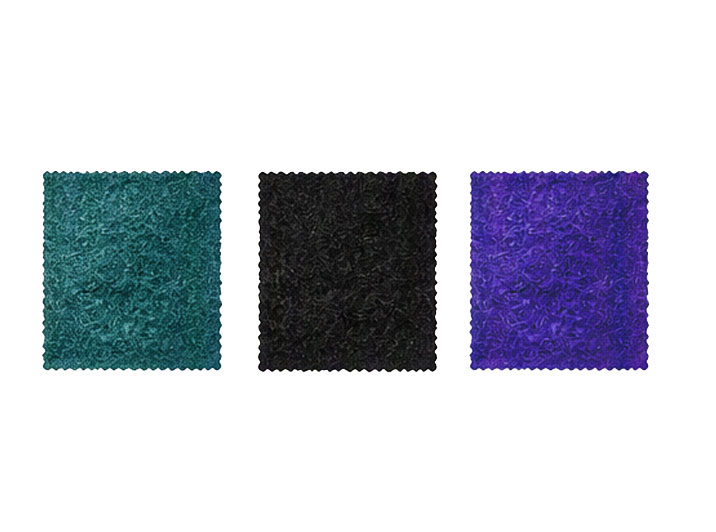
Materials are reused, recycled and sustainable. All fabrics have been sourced from the ‘souplothèque’ – a warehouse in Brussels that
resells fabric and soft material scraps per kilo in an affordable way, specificially directed at artistic projects. The panels have been
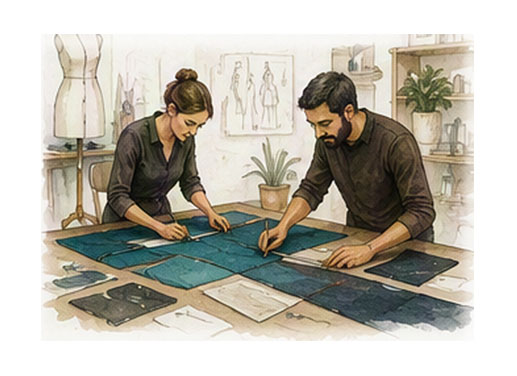
sewn together from scrap fabrics to create a big surface for the final fabric.

The process
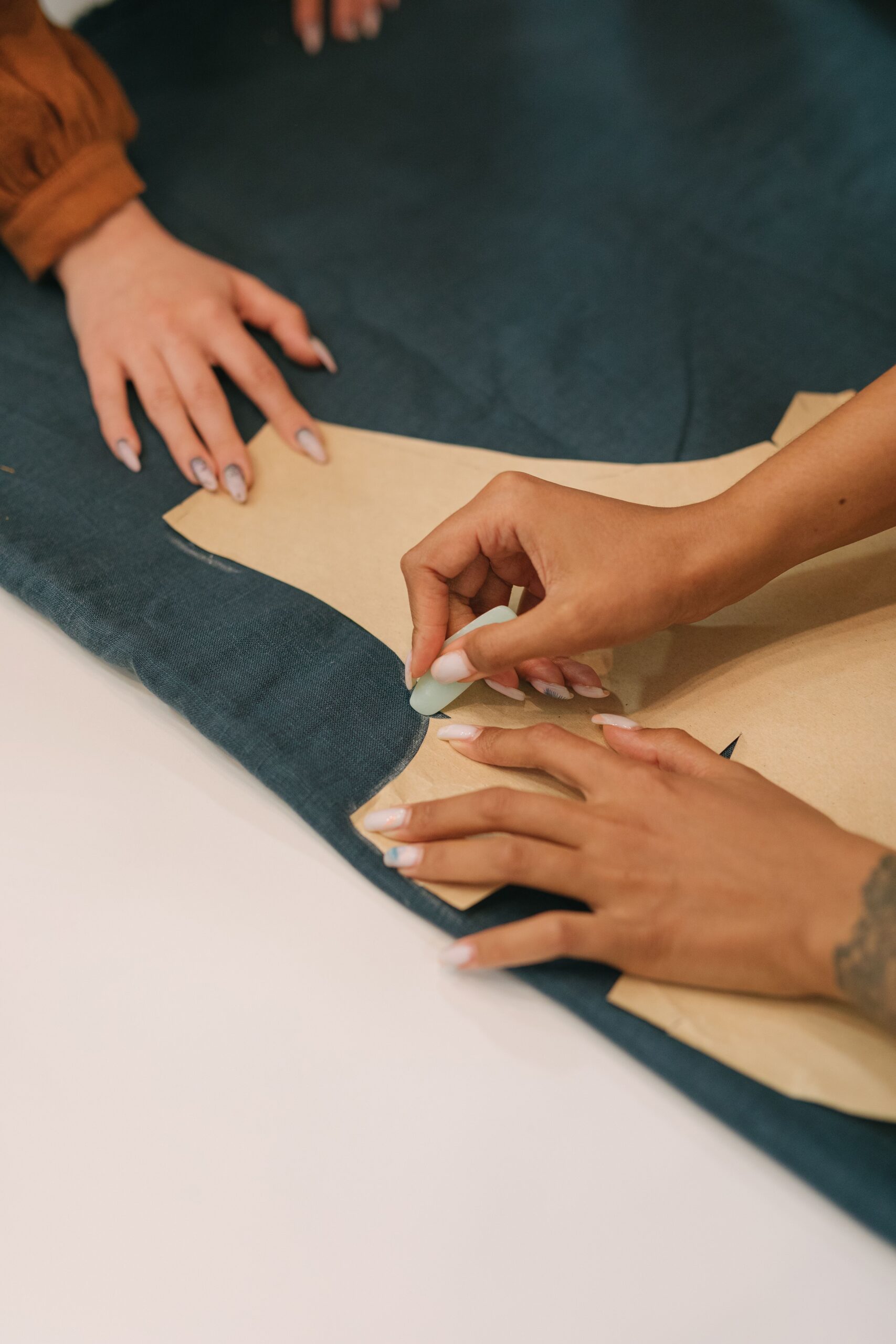
We went to a ‘souplothèque’ to source and get secondhand fabrics and fabric scraps, with which the garment was made.
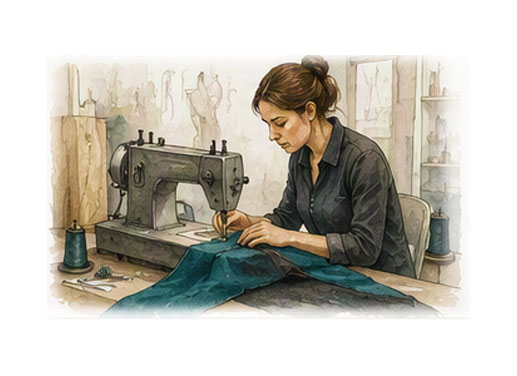
Participants Zakaria and Azadeh helped sewing and cutting the panels together to create larger fabric and sewed mostly straight lines. The more complicated parts were assembled by the Designer.
Our Team
The whole is much more than the sum of it’s part. Meet our team!
Users Participating in the project
Sabine, Jonathan, Zakaria and Azadehuad, Jonathan

Berenike Corcuera
SUPERVISOR
Berenike Corcuera (1994, Lima, Peru) is a German-Peruvian visual artist whose work is grounded in embroidery and appliqué
and contemporary explorations of diasporic narratives, consciousness and identity. Her exhibitions across Europe and
internationally have positioned her as a voice attuned to textile’s capacity for both intimacy and collectivity, often framing
the act of handcrafting itself as a ritual of presence and encounter. She explores questions of belonging, spiritual inheritance
and resistance and the politics of material. Her large-scale textile works function as meditations on land, identity and
transgenerational memory and she draws from her third culture upbringing, engaging with material as both a sacred,
meditative medium and a political tool. Since graduating from Central Saint Martins (BA(hons) Fashion, 2019) and Institut
Français de la Mode (MA Menswear, 2020) she has presented solo exhibitions at Brigade Gallery Copenhagen (DK, 2022) and
Zinnema (BE, 2026) and has participated in institutional group shows at Centrale for Contemporary Art Brussels (BE, 2025),
Market Art Fair Stockholm (SE, 2023), Van der Plas Gallery New York City (USA, 2025) and La Manufacture Museum of Textile
Memory & Creation Roubaix (FR, 2026).
She explores questions surrounding connectedness, spiritual heritage, resistance, and the politics of material. Her large-scale textile works function as meditations on land, identity, and transgenerational memory. In doing so, she draws on her “third culture” background and approaches material as both a sacred, meditative medium and a political instrument. Since graduating from Central Saint Martins (BA(Hons) Fashion, 2019) and the Institut Français de la Mode (MA Menswear, 2020), she has presented solo exhibitions at Brigade Gallery Copenhagen (DK, 2022) and Zinnema (BE, 2026).


With the support of the Creative Europe Programme of the European Union
Funded by the European Union. Views and opinions expressed are however those of the author(s) only and do not necessarily reflect those of the European Union or the European Education and Culture Executive Agency (EACEA). Neither the European Union nor EACEA can be held responsible for them.