

Belgium
Knot Knot
This work was created through a collective process involving artists from diverse backgrounds,
working across textile, visual art, and performance. The group shares an interest in material
experimentation, handcraft, and the relationship between form and emotion.
Through collaborative making, each artist contributed an individual element that reflects their
personal perspective and experience. These contributions were brought together into a single
sculptural garment, emphasizing connection, care, and interdependence.
The collective approach highlights the role of making as a shared practice, where craftsmanship
becomes a tool for dialogue, and where individual expressions are woven into a unified structure.
This piece was created through a collaborative process between artists working across textile,
visual art, and material-based practices. The group shares an interest in handcraft, reuse, and the
transformation of everyday materials into expressive forms.
Using rope sourced from a recycling center, the artists explored techniques of braiding and
assembly to construct a wearable structure. Each contribution reflects an individual approach to
material and form, while the final piece emphasizes collective strength and interconnection.
The process highlights sustainability as both a practical method and a conceptual framework,
where reuse and manual labor shape the meaning of the work.
By reusing materials from a recycling context, the piece reflects contemporary concerns around
sustainability and resourcefulness. It reinterprets traditional handcraft techniques in a modern
setting, where discarded materials are transformed into meaningful objects.
Within the collective framework of the MUSE project, the work highlights how shared labor and
material reuse can create new forms of value. The garment embodies a shift from individual
authorship to collective construction, where strength is built through collaboration.
The piece is made from ropes sourced from a recycling center, giving a second life to discarded
materials. These ropes retain traces of previous use, contributing to the material narrative of the
work.
Thread and stitching materials are used to assemble the braided elements, supporting the construction without introducing unnecessary additional materials. The work is based on reuse and transformation of existing materials rather than the production of new ones. By sourcing materials from a recycling center, the piece actively reduces waste and extends the lifecycle of discarded objects.
The making process is entirely manual, relying on braiding and stitching techniques. This reduces the environmental impact associated with industrial production and emphasizes slow, low-energy methods.
Material efficiency is central to the process: all selected ropes are integrated into the final piece,
minimizing waste. The project also highlights the value of local sourcing and hands-on making within a collaborative context.


The process
The piece is constructed using ropes sourced from a recycling center visited during the project.
These materials were selected for their durability and previous life, bringing an additional layer of meaning to the work.
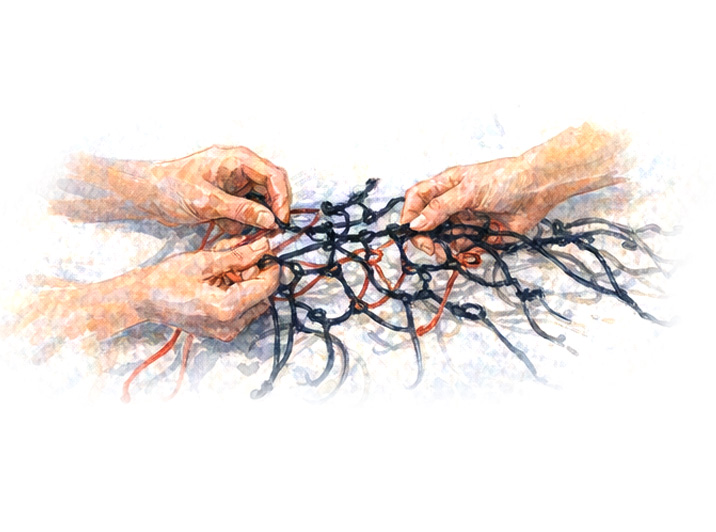
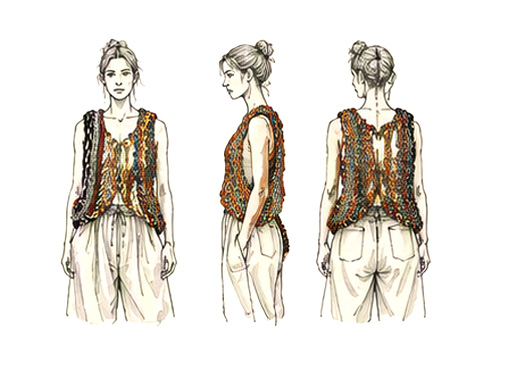
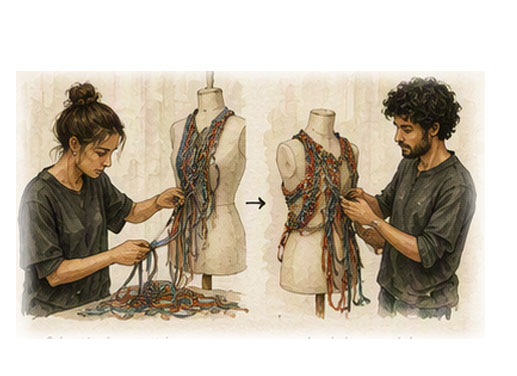
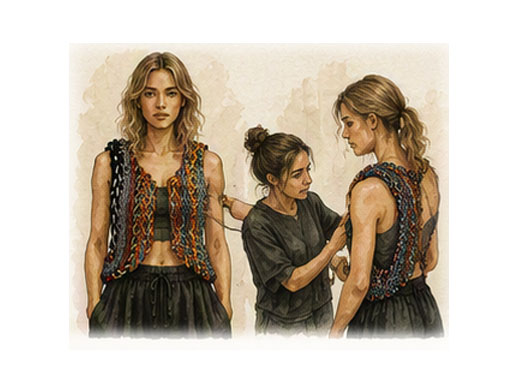
The ropes were manually braided into thick strands and then sewn together to form a top-like garment. This process required repetitive handwork, where each braid contributes to the overall strength of the structure.
By assembling multiple braided elements, a dense and heavy textile surface emerges. The sewing process binds the separate parts into a cohesive whole, allowing flexibility while maintaining structural integrity.
Our Team
The whole is much more than the sum of it’s part. Meet our team!
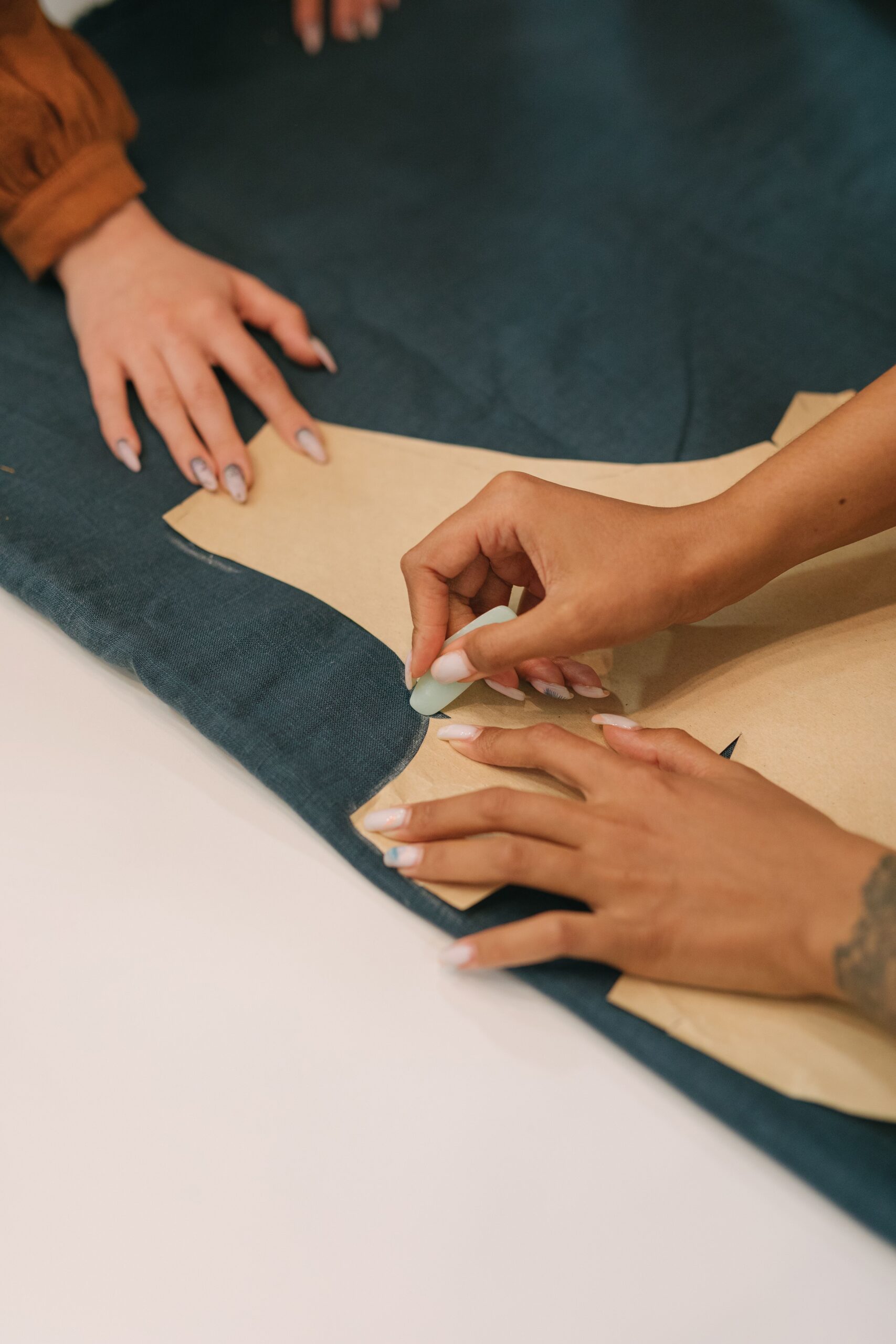
Users Participating in the project
Mouad, Jonathan, George, Sabine

George Dhauw
SUPERVISOR
Artist – textile art — Composer/Sound Designer — Music producer
George Dhauw is a transdisciplinary artist and composer based in Brussels.
His work explores the intersection of textile and sound, with a strong
focus on mental health and the sensory experience of urban life.
His practice is rooted in silence, tactility, and a fascination with
how sound and textile can bridge the invisible and the felt.


With the support of the Creative Europe Programme of the European Union
Funded by the European Union. Views and opinions expressed are however those of the author(s) only and do not necessarily reflect those of the European Union or the European Education and Culture Executive Agency (EACEA). Neither the European Union nor EACEA can be held responsible for them.